
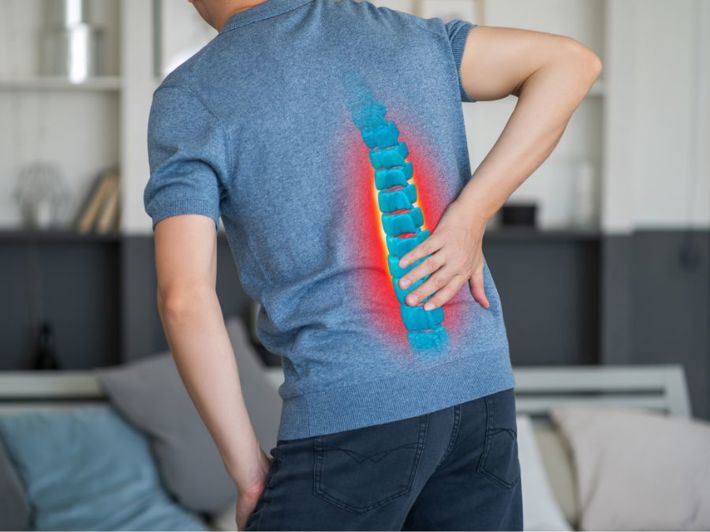
The most common type of spinal disc herniation occurs in the lower back, specifically between the fourth and fifth lumbar vertebrae (L4–L5). Learn everything you need to know about L4–L5 disc herniation.
What is L4–L5 Disc Herniation?
L4–L5 disc herniation refers to a herniated disc in the lower back at the L4 and L5 vertebrae.(1)
The spine is composed of stacked vertebrae separated by cartilage discs that act as cushions. Each disc contains a gel-like center that maintains flexibility and absorbs pressure. When a disc becomes damaged or torn, its gel may leak, putting pressure on nearby nerves and causing inflammation. This leads to pain and discomfort in the areas supplied by these nerves.(1)
Causes of L4–L5 Disc Herniation
Lower back disc herniation often occurs due to aging, as discs become less flexible and more prone to wear and tear over time. Other contributing factors include injuries or falls, repetitive stress on the back such as lifting heavy objects, frequent bending, or poor posture, as well as lifestyle factors like physical inactivity and excess weight.(2)
Symptoms of L4–L5 Disc Herniation
Common L4–L5 Disc Herniation symptoms include:(3)(5)
Lower Back Pain
- Can be intermittent and last several days at a time
- May radiate to one or both legs
- Often worsens with activities such as bending, twisting, lifting, or prolonged sitting
Sciatica Pain
- Sharp, shooting pain resembling an electric shock
- Extends from the hip down one leg
Numbness and Tingling
- Sensations of pins and needles in the legs, feet, or toes
- Can be constant or intermittent
Muscle Weakness
- May affect leg or foot muscles
- Can cause difficulty walking or standing
Do not wait for symptoms to worsen! Book an appointment today at the Neurosurgery and Spine Center at Al-Ahli Hospital for accurate diagnosis and the best treatment.
Diagnosis of L4–L5 Disc Herniation
After reviewing your medical history, the doctor will use several diagnostic tools. A physical examination identifies symptoms and locates the source of pain, while imaging tests, such as MRI or CT scans, confirm the diagnosis and assess the severity and impact on nerves and surrounding tissues.(4)
Treatment of L4–L5 Disc Herniation
Treatment depends on the severity of the condition. Symptoms often improve on their own within a few days, while full disc recovery may take one to one and a half months. Self-care measures can help accelerate recovery, reduce pain, and relieve inflammation:(3)(5)
- Rest: Allow sufficient rest for a few days
- Avoid strenuous activities: Avoid heavy lifting, prolonged sitting, or wearing high heels
- Maintain proper posture: Sit, stand, and sleep in correct positions
- Hot or cold compresses: Apply to the affected area
- Medications: Pain relievers or muscle relaxants
- Exercise and physical therapy: Perform strengthening and flexibility exercises under a physiotherapist’s supervision
- Corticosteroids: May be prescribed orally or injected directly into the affected area to reduce inflammation
Surgery may be considered if conservative treatments are ineffective, symptoms severely impact daily life, or more serious symptoms appear, such as bladder or bowel incontinence.
References
- Disc Herniation - StatPearls, NCBI Bookshelf.
- Herniated disk - Symptoms and causes, Mayo Clinic.
- Herniated Disk in the Lower Back - OrthoInfo - AAOS.
- Herniated Disc - Symptoms and Causes, Penn Medicine.
- Herniated Disc – Symptoms, Causes, Prevention and Treatments, American Association of Neurological Surgeons


