
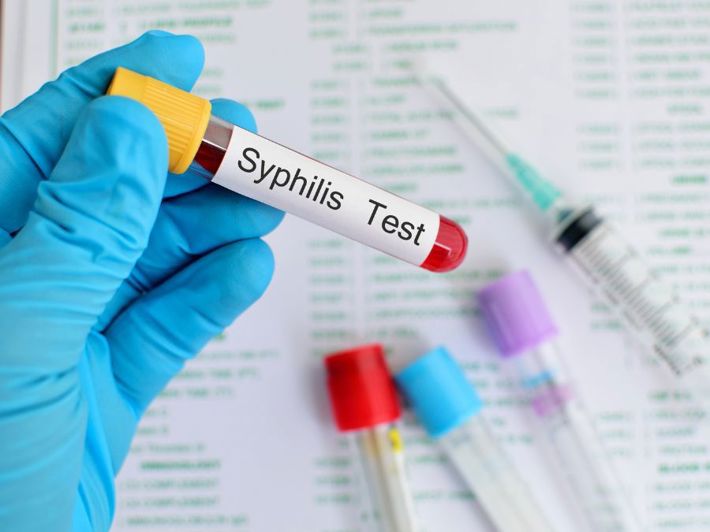
Although syphilis may be unfamiliar to many, it is more common (and more serious!) than most people think. According to the World Health Organization, approximately 8 million cases of syphilis were reported worldwide in 2022. In Qatar, it is one of the most common sexually transmitted infections alongside gonorrhea.
To help you understand this condition better, here are the 7 most common questions about syphilis with their answers.
1. What is syphilis?
Syphilis is a sexually transmitted infection (STI) caused by a bacterium called Treponema pallidum. It can be easily treated with antibiotics.
If left untreated, syphilis can cause serious complications, including: (1)
- Blindness
- Brain damage
- Heart problems
- Nervous system disorders
2. How can I get syphilis?
Syphilis is transmitted through sexual contact, especially when coming into contact with sores (chancres) on an infected person.
Transmission is possible even without penetration, as the sores may appear on areas involved in sexual contact, such as: (2)
- External genitalia
- Vaginal canal
- Around the anus or rectum
- Mouth
3. What are the symptoms of syphilis in men, and how do they differ from women?
Syphilis develops in stages that may span years. Symptoms are generally similar in men and women.
Stage 1 – Primary Syphilis:
- Small, usually painless sore(s) appear where the bacteria entered the body.
- Most have one sore, but some may have multiple.
- Appears about 3 weeks after exposure (sometimes earlier or later).
- The sore may be hidden inside the vagina or rectum.
- The sore heals on its own in 3–6 weeks, but the infection persists.
Stage 2 – Secondary Syphilis:
- Begins after the sores heal, weeks to months later.
- Characterized by:
- Red or brown rough rash, often on the trunk, palms, and soles
- Flu-like symptoms that appear and disappear:
- Fever
- Muscle aches
- Hair loss
- Sore throat
- Fatigue
- Swollen lymph nodes
- Headache
Latent Stage:
- Symptoms disappear completely but bacteria remain in the body.
- Can cause serious complications later if untreated.
Stage 3 – Tertiary Syphilis:
- Occurs 10–30 years after untreated syphilis.
- Can cause life-threatening complications affecting: (1)(3)
- Heart
- Brain
- Nervous system
- Eyes
- Bones
- Other organs
4. How is syphilis diagnosed, and when should I get tested?
- Diagnosis: Blood test for antibodies against Treponema pallidum.
- If you have a sore, a swab may also be taken.
- Re-testing may be needed if initial results are negative. (4)
When to get tested:
- After unprotected sex
- If your partner is infected
- Presence of a painless sore or unexplained rash
- Pregnant women: test at the start of pregnancy and in later weeks
Early detection and antibiotic treatment are crucial to prevent serious complications and stop transmission to your partner.
5. How is syphilis treated?
- Treatment is simple: a single intramuscular injection of penicillin.
- If infected for over a year, additional doses may be needed. (2)(3)
During treatment: (2)(3)
- Follow-up tests after 6 and 12 months to ensure cure.
- Avoid sexual contact until sores heal and blood tests confirm recovery.
- Inform your partner for testing and treatment if necessary.
- Screen for other STIs, including HIV, as a precaution.
6. Can syphilis be cured?
- Yes, antibiotics can completely cure syphilis.
- However, damage from delayed treatment (e.g., nerve, heart, eye problems) cannot be reversed. (5)
7. Can I get syphilis again after treatment?
- Yes, treatment does not protect against reinfection.
- It's important that partners are informed and treated if necessary. (5)
References
- Oklahoma HIV & Hepatitis Planning Council (OHHPC) - Syphilis: Understanding Causes, Symptoms, and Prevention in Oklahoma
- Cornell Health - Syphilis
- Mayo Clinic - Syphilis
- IUSTI - Syphilis
- CDC - About Syphilis