
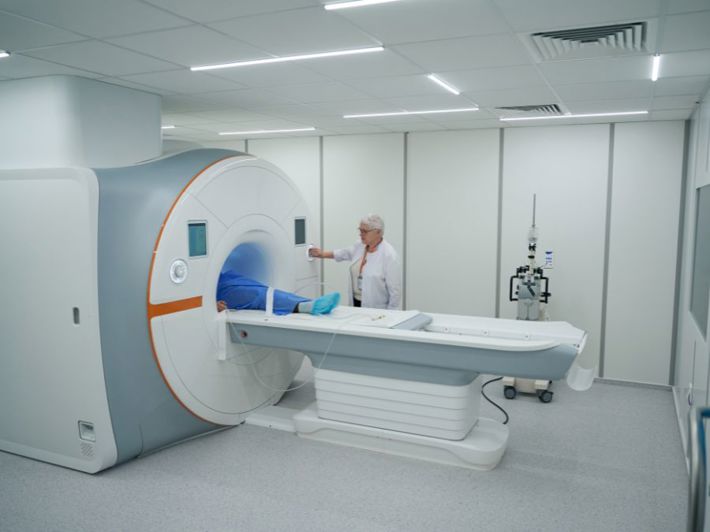
What Is a Spinal MRI?
A spinal MRI (magnetic resonance imaging) is a scan that uses a strong magnetic field and radio waves to create detailed images of the spine, including bones, vertebrae, discs, and the spinal cord. It provides clearer images than X-rays or CT scans and can be done with or without contrast dye. (1)
Why Is It Done?
A spinal MRI is usually recommended if you have chronic back or neck pain or other symptoms that other imaging tests cannot explain. It can help detect: (1)
- Disc problems (herniated or bulging discs) and nerve compression (e.g., sciatica)
- Spinal canal narrowing (stenosis)
- Tumors affecting the spine or spinal nerves, including metastatic cancers
- Spinal fractures
- Arthritis or spinal osteoarthritis
- Infections
- Nerve damage from injury or disease (e.g., multiple sclerosis)
- Congenital spine problems
- Reduced blood flow to certain areas of the spine
How to Prepare for an MRI
Before the scan:
- You may need to change into a hospital gown.
- Remove all jewelry, accessories, and metallic items.
- Inform the technician if you have any metal implants such as braces, surgical screws, plates, pacemakers, or cochlear implants. (2)
How Is the MRI Performed?
The procedure usually takes 15–60 minutes: (2)
- You lie on your back on the MRI table with your arms at your sides.
- The technician gives instructions via intercom.
- The table moves into the MRI machine, which often looks like a doughnut.
- Stay as still as possible and breathe normally—movement can blur images.
- Multiple images are taken in stages.
- After the scan, you can resume normal activities.
Contrast dye: Sometimes, a dye is injected into a vein to improve image quality. Your doctor or technician will explain if it’s needed and any precautions.
Is It Painful?
No, MRI is painless. You may feel slight warmth in the area during or after the scan. (3)
Report any unusual symptoms after the scan, such as:
- Nausea or vomiting
- Dizziness
- Pain
- Breathing difficulties
Is It Safe?
Yes, MRI is safe and does not use X-rays or ionizing radiation. It is generally safe for pregnant women without contrast dye. (4)
Important safety notes regarding metal:
MRI is not suitable if you have:
- Certain implanted devices (e.g., some pacemakers, defibrillators, nerve stimulators)
- Internal metal (screws, plates, clips) unless confirmed MRI-safe
- Cochlear implants or medication pumps (some may be MRI-compatible)
- Bullets or shrapnel in the body
- Certain tattoos containing metallic inks (rarely causes heat)
Modern devices and implants may be MRI-compatible with precautions—always inform the technician and your doctor of your exact device.
IUDs: Copper IUDs are generally safe for MRI, but technicians should be informed.
Contrast Dye Use
- Sometimes used to enhance image clarity.
- Usually safe, but caution is needed for patients with kidney problems.
- Always inform the technician about allergies.
- Drink plenty of water after the scan to help eliminate the dye from the body. (4)
When Are Results Available?
Spinal MRI results are typically available within 1–2 days. (1)
References
- HealthLink BC - Magnetic Resonance Imaging (MRI) of the Spine
- Spine Health - MRI Scan of the Spine
- MyHealth.Alberta - MRI of the Lumbar Spine: About This Test
- RadiologyInfo.org - MRI Safety